Why Deep Watering Improves Root Growth: Secret to Resilient Gardens
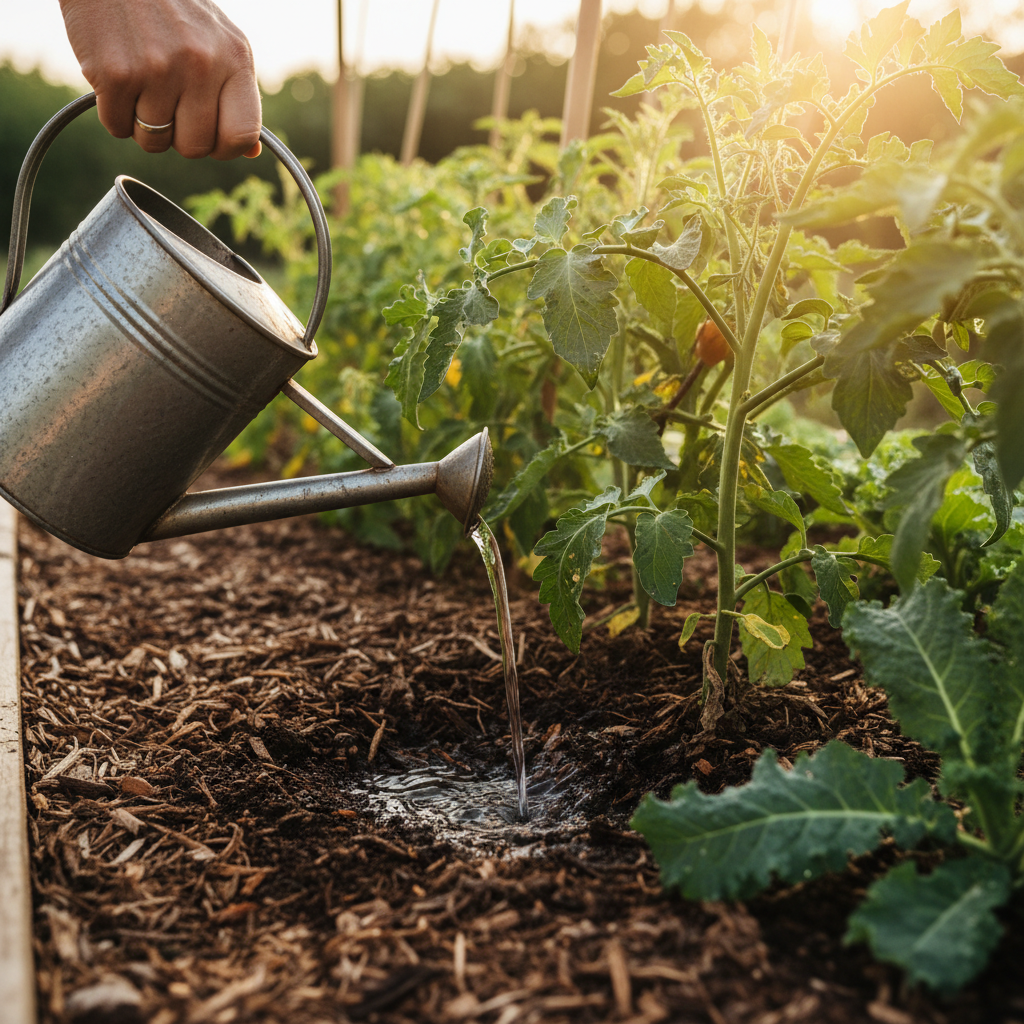
If your vegetable garden looks wilted by noon despite watering every single morning, you might be falling into a common trap. When I first started gardening, I thought a quick daily sprinkle was the best way to keep my plants hydrated. In reality, I was training my plants to be weak.
By switching to a deep watering schedule, I’ve seen my garden transform. Here is why deep watering is the ultimate garden planning tip for growing resilient, drought-resistant vegetables.
1. Encourage Roots to Reach Deep
When you water lightly and frequently, the moisture stays in the top inch of soil. Naturally, roots stay where the water is. This creates a shallow root system that is highly vulnerable. By watering deeply, you saturate the soil several inches down, signaling to the roots that they need to grow downward to find moisture.
2. Protect Against Summer Heat
Shallow roots live in the "danger zone"—the part of the soil that heats up and dries out first under the summer sun. Deep roots are insulated by the earth. By encouraging deep growth, your plants can tap into cooler, moisture-rich soil even during a mid-season heatwave.
3. Build Structural Stability
Plants with deep root systems are physically stronger. Whether it’s a heavy harvest of tomatoes or a sudden summer windstorm, a deep-rooted plant is less likely to topple over. This structural integrity starts with how you handle your hose or irrigation system early in the season.
4. Reduce Disease Risks
Frequent shallow watering usually means the foliage of your plants gets wet every day. Constant moisture on leaves is a recipe for powdery mildew and blight. Deep watering (ideally at the base of the plant) allows you to water less often, giving the garden surface and foliage time to dry out between sessions.
5. How to Test Your Depth
Not sure if you’re watering deep enough? After your usual watering session, poke a finger or a trowel into the soil. If the top is wet but it’s bone-dry two inches down, you need to increase your watering time and decrease the frequency. Aim for a "soak and dry" cycle rather than a "puddle and evaporated" cycle.
Tracking Your Results
Every garden has different soil—sandy soil drains fast, while clay holds onto water longer. It takes a little experimentation to find the perfect rhythm for your specific backyard. Keeping a log of your watering schedule and how your plants react to heat can help you master your garden's needs.
Start tracking your watering patterns today by using a garden planner to see what works best for your soil type.
Track your watering schedules in the CozyGrow Garden Journal!
Start planning your garden →